Overview of Advance Care Planning
The ongoing process of considering your preferences, values and priorities for health care.
Definition: Advance care planning (ACP) the ongoing process of discussing and planning, in advance of injury, serious illness or catastrophic event, for future medical decisions at a time when you may be unable to speak for yourself.
This includes conversations with friends, family members, and your health care providers, completing an advance directive, and possibly completing a limitation of treatment order (DNR/COLST) with your clinician.

When should I start?
Having conversations early, when you are healthy, will relieve those closest to you of the burden of having to guess about what you would think about various health circumstances.
As early as 18, everyone should consider appointing a health care agent in an advance directive.
If you become too sick to make your own health care decisions, your clinicians will need to consult with your family or close friends to learn more about what you would say in certain situations. The best way to guarantee that your wishes are known and honored is to talk to members of your family, close friends and health care providers about your goals and preferences for care and treatment, and document those preferences in an advance directive.
The Purpose of Advance Care Planning
- Create better communication between you, your health care provider, and your appointed health care agent (medical decision-maker)
- Decrease conflict when decisions need to be made
- Preparing yourself and your medical-decision maker for future medical decisions
The Benefits of Advance Care Planning
It is impossible to predict the exact health situation you might be in and what treatments will be available to you at that time. Discussions with those closest to you about your goals and values can help to guide the “in the moment” decisions that may need to be made and will allow you to maintain as much control over your health care as possible. Starting conversations before a health crisis will help to:

- Improve communication between you and your HC provider
- Improve communication between you and your agent/surrogate
- Decrease stress and anxiety for you and your family about future health decisions
- Increase satisfaction with the health care experience
- Improve access and support from palliative care and hospice services
- Improve access to grief and bereavement support
Getting Started: Think First, Then Share
- What is important to you when making decisions about your health care
- What your hopes and fears are for the future
- Who knows you best and who do you trust to speak on your behalf if you’re not able
- What you would or would not be willing to sacrifice for a chance to get better
- What is most important to you if your doctors become worried that you are seriously ill or dying
- When it would be okay to shift from a focus on curative care to a focus on comfort care alone
Speak with your trusted family members, friends and healthcare providers about:
- Answers to any of the “Think About” questions above.
- The situations, values, and preferences for your healthcare that you have considered.
- Your goals and priorities to help guide the “in the moment” decisions that may need to be made.
- If you were too sick to speak for yourself, who should be involved in making decisions?
- What should people know about you as a person to make sure you get the care that’s right for you?
- If an illness got very serious and might take your life, what would be most important?
- “I need your help with something.”
- “Remember how someone in the family died—was it a ‘good’ death or a ‘hard’
death? How will yours be different?” - “I was thinking about what happened to _______, and it made me realize…”
- “Even though I’m okay right now, I’m worried that ________, and I want to
be prepared.” - “I need to think about the future. Will you help me?”
- “I just answered some questions about how I want the end of my life to be.
I want you to see my answers. And I’m wondering what your answers would be.”
Source: Conversation Starter Kit, The Conversation Project
Video: Practice Makes Perfect by The Conversation Project
- Check out The Conversation Project to learn more about National Healthcare Decisions Day (NHDD) and their mission to inspire, educate and empower the public and providers about the importance of advance care planning.
Advance Care Planning Worksheets/Resources
 A Comprehensive Guide to Medical Decision-Making
a publication of the Vermont Ethics Network
A Comprehensive Guide to Medical Decision-Making
a publication of the Vermont Ethics Network
 Medical Situations & Treatments Worksheet
produced by the Vermont Ethics Network
Medical Situations & Treatments Worksheet
produced by the Vermont Ethics Network
 Patient Values Questionnaire
produced by the Vermont Ethics Network
Patient Values Questionnaire
produced by the Vermont Ethics Network
 A Patient's Guide to Difficult Conversations
a publication of SpeakSooner
A Patient's Guide to Difficult Conversations
a publication of SpeakSooner
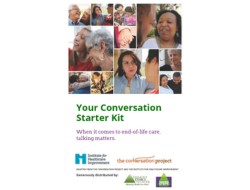 Your Conversation Starter Kit
a publication of The Conversation Project
Your Conversation Starter Kit
a publication of The Conversation Project
VEN's Advance Care Planning Reading List
 Can't We Talk About Something More Pleasant?
a memoir by Roz Chast (2014)
Can't We Talk About Something More Pleasant?
a memoir by Roz Chast (2014)
 Being Mortal
by Atul Gawande, MD (2014)
Being Mortal
by Atul Gawande, MD (2014)
 Dying Well: Peace and Possibilities at the End of Life
by Ira Byock, MD (1998)
Dying Well: Peace and Possibilities at the End of Life
by Ira Byock, MD (1998)
 The Four Things That Matter Most
by Ira Byock, MD (2014)
The Four Things That Matter Most
by Ira Byock, MD (2014)
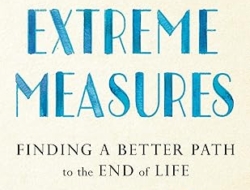 Extreme Measures: Finding a Better Path to the End of Life
by Jessica Nutik Zitter, MD (2017)
Extreme Measures: Finding a Better Path to the End of Life
by Jessica Nutik Zitter, MD (2017)
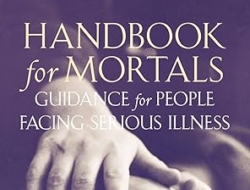 Handbook for Mortals
by Joanne Lynn, MD & Joan Harold, MD (1999)
Handbook for Mortals
by Joanne Lynn, MD & Joan Harold, MD (1999)
